Sell my house fast in Des Moines, IA
Selling in Des Moines proper is a different problem from selling in the suburbs. The housing is older and far more varied, more of it is rented, and more of the people who call us have something going wrong than in any town on the edge of the metro.
Get a cash offer
Free, and no obligation.
- We talk. About ten minutes: the house, its condition, your date.
- I come and look, in person, usually within a day or two.
- You get a written offer with the number explained. No obligation.
Rather talk now? Call 515-303-3405.

When you call, you get me. I buy with my own funds and close in my own name.Drew Heberer, owner, Heberer Homes
- 200+transactions closed across this metro
- 10+ yearsbuying houses in this metro
- No feesno commission, no repairs, no showings
- 24 hoursto hear back from me, call or form
We buy houses in Des Moines for cash, in any condition, on a closing date you pick. No commission, no repairs, no showings. We pay cash for homes that no agent would list as they stand. Drew Heberer, more than 200 transactions across this metro. Call 515-303-3405 and I will come back to you inside 24 hours.
Jump to your situation
A Beaverdale house, bought exactly as it sat
Here is a real one, because it is the clearest illustration of what we actually do.
A seller in Beaverdale had inherited a house. She did not clean it out. She did not fix a single thing. She did not have a contractor walk it, get a roof quoted, or paint anything. She came to closing, signed, and left with a fair price she was happy with.
That is the entire proposition. Everything a conventional sale asks of you, the clearing, the repairs, the staging, the Sunday showings, the inspection negotiation, the wait on somebody’s mortgage approval, we take off the table. If you want to sell your house fast in Des Moines without doing any of it, that is the deal.
Beaverdale is a good example of why this matters here specifically, which is the next section.
Des Moines housing is genuinely old, and it changes everything
The suburbs around this city are mostly post-1990. Des Moines proper is nothing like that, and if you own here it is the single most important fact about your sale.
Beaverdale’s subdivisions were largely developed between 1920 and 1940, with a major wave of construction after the depression years. The neighborhood is known for the “Beaverdale Brick,” a local variation on Tudor Revival built from the late 1930s by contractor E.T. McMurray. The Ashby Manor Historic District within it covers housing from roughly 1925 to 1941. Elsewhere in the city the eras differ street by street, with bungalows and square houses common on the older west and south sides. Drake, Sherman Hill, Highland Park and the older East and South Side streets all run to similar vintages or older.
Houses of that age carry a predictable list, and a buyer’s inspector will find all of it inside two hours:
Undersized electrical panels and knob and tube or early cloth-sheathed wiring. Galvanized steel supply lines corroding from the inside, which shows up as pressure that has quietly worsened for years. Cast iron and clay sewer laterals with root intrusion. Original single pane windows. Plaster that has moved. Foundations of brick, stone or early block that have settled. Asbestos-containing floor tile and pipe insulation. And because the housing predates 1978, lead-based paint, which triggers federal disclosure obligations and can generate requirements on a government-backed loan.
None of that makes a house unsafe to live in. All of it makes a conventional sale harder, because an FHA or VA appraiser assesses condition rather than merely valuing the property, and a requirement has to be satisfied before the loan funds. That is the point at which a seller who was trying to avoid spending money ends up spending it mid-escrow, on somebody else’s timetable.
We buy as-is and as is. No appraiser enters the transaction. If you would rather read the longer version, we wrote up selling a house that needs major repairs in Iowa.
“Drew is Extremely professional! Truly cares about solving the problems. He was able to think outside the box and help me find a solution that I thought was impossible to solve that nobody else could come up with. Such a breath of fresh air working with him. Life saver!!”
Kyle DornAdel, Google review
“I recently had the pleasure of working with Heberer Homes to sell my property. From the initial contact to the closing, their team handled every aspect of the process with excellent customer service, efficiency, and transparency. They were very knowledgeable, responsive, and just really down to earth and easy to work with. They handled everything for me, so my closing was a breeze! Trust me, you won’t be disappointed!”

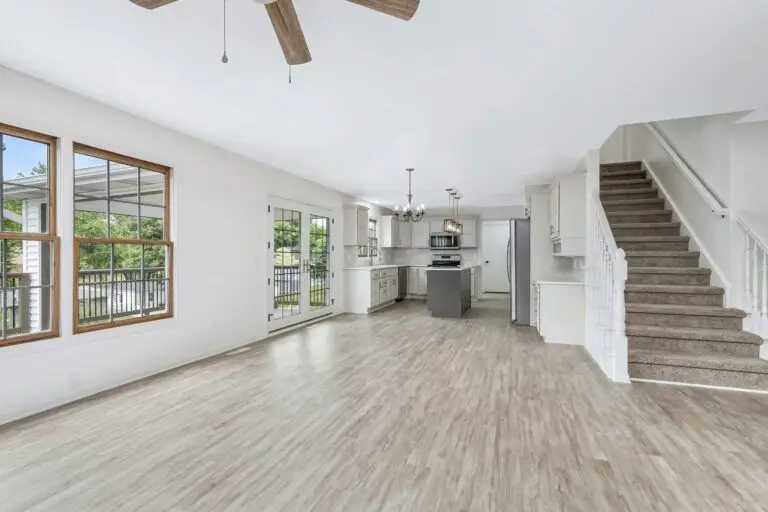
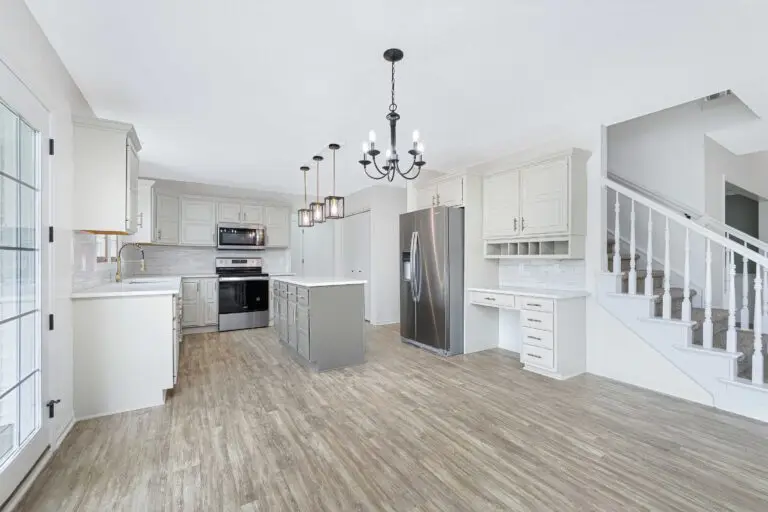
Where we buy in Des Moines
Across the city. A few areas come up often enough to name, and they are genuinely different markets.
Beaverdale
Period brick houses on established streets, strong neighborhood identity, and buyers who either specifically want the character or walk away from the maintenance. Our inherited purchase above was here.
Drake and the near north
University adjacency means a large rental share and a lot of houses that have been tenanted for decades, which usually means deferred maintenance measured in decades too.
Sherman Hill and the near west
Older, often larger, sometimes grand, frequently expensive to maintain. Renovation here is slower and more expensive than owners expect.
Highland Park and the north side
Modest older housing at attainable prices, substantial investor and landlord presence, and a lot of properties that have changed hands between investors who buy houses rather than between families.
The East Side and the South Side
The bulk of the city’s working housing stock. Smaller footprints, older systems, and the highest concentration of the situations further down this page.
The newer edges
Des Moines also has post-war and later construction out toward its boundaries, which behaves more like a suburban sale than an inner-city one.
A note on the name: this page is about Des Moines proper. If your house is actually in West Des Moines, that is a different city with different schools and partly a different county, and our West Des Moines page is the right one for you.
Landlords, tenants, and tired rentals
Des Moines has the metro’s deepest rental market, and a large share of our calls here come from people who own rental property rather than the house they live in.
The patterns repeat. A landlord who bought three houses in the 2010s and is now managing them at sixty. An out-of-state owner who inherited a rental and has never seen it. Somebody holding a duplex where the tenant stopped paying eight months ago and the thought of an eviction is exhausting. An investor who bought at auction, started the work, and ran out of money with the kitchen on the floor.
What we do about it: we buy occupied, tenant and lease exactly as they stand. You do not need to evict anybody, you do not need to turn the unit, and you do not need to wait out a lease. An eviction already in progress does not disqualify the property, and squatters are a solvable problem instead of a reason to decline. Send me the lease and an honest list of what is wrong. More detail in selling a rental property with tenants in Iowa.
One honest caveat that applies to every occupied purchase: a tenant’s rights under an existing lease transfer with the property and I will honor them. That occasionally makes an occupied building worth less to us than a vacant one, and I would rather say so now than at the closing table.
Why people in Des Moines call
You inherited a house
The most common call from this city by a wide margin, and the age of the housing is why. People bought these houses in the 1950s and 1960s and stayed in them for life. We buy inherited homes with the contents still inside. Take what matters and leave everything else. If probate is open the court timeline drives the schedule more than the house does, and a fiduciary administering an estate is frequently exempt from the Iowa condition disclosure, though not if that fiduciary lived in the house within the twelve months before the sale. Start with what to do first with an inherited Iowa house.
Behind on payments, foreclosure, back taxes
If you are behind on payments, call before a foreclosure sale date is set instead of after. Depending on your equity we can often clear arrears and unpaid or back taxes through closing, and where equity is short there are private structures no listing can offer. Foreclosure-related transfers are also exempt from the Iowa seller disclosure.
A house that needs more than you will spend
Roof, furnace, water heater, wiring, plumbing, windows, all arriving together in a house of this era. The quote to make it listable comes back at a figure you will not put into a property you are leaving.
Divorce
A firm number, a date certain, and a written document both attorneys can read, with no showings and nothing in the yard.
You live somewhere else
A great deal of Des Moines property belongs to people who moved away. You never have to come back. Closings run remotely through the title company and I will walk the property and send you a straight account of what I find.
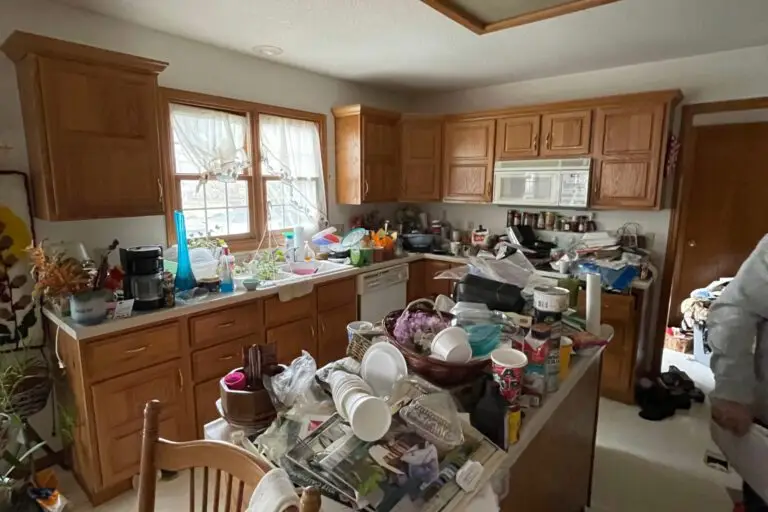
Fire, water, mold, hoarding
Fire and smoke damage, water damage from a failed sump in a finished basement, mold, hoarding conditions. Routine for us and fatal to most conventional sales. See selling a fire or water damaged house in Iowa.
A vacant house
Vacancy in the city is worse than vacancy in a suburb. Insurance narrows sharply and costs more, nuisance and mowing ordinances still apply, copper and fixtures go missing from empty houses, and an unheated Iowa winter destroys old plumbing. Selling ends all of it.
Relocation
A transfer date that arrives before the house could ever be made ready, leaving you choosing between two housing payments and a sale you control.
Not on the list? Call 515-303-3405. You will hear from me within 24 hours.
Half-finished renovations, and why they are hard to sell
We see more of these in Des Moines than anywhere else in the metro, and if you are sitting in one you already know how few people will talk to you about it.
The story is consistent. Somebody buys an older city house intending to renovate it. Maybe a first-time investor, maybe an owner who watched enough television to believe the timeline. Walls come out. The kitchen goes to the curb. Then the money runs out, or a contractor disappears with a deposit, or the wiring behind the plaster turns out to need the whole house re-run, or a permit problem stops the job cold.
What you are left with is a property that is neither livable nor listable. No conventional buyer can finance it, because a lender will not lend on a house with no functioning kitchen or bathroom. No owner-occupant wants it. And most house buying companies will not quote it either, because their models are built on a house that exists instead of one that is partly disassembled.
We buy them, and the reason is mundane: we were going to do the renovation anyway, so demolition that is already finished causes us no trouble. Sometimes it helps us, because the surprises have already surfaced and somebody else paid to find them.
What I need from you, honestly: what has been done, what has been opened up, whether permits were pulled and what state they are in, whether anything was inspected and signed off, and whether any contractor is owed money, because an unpaid contractor can file a mechanic’s lien against the property and that has to be dealt with at closing. Hiding it does not help you. I will find it in the title search and then we are renegotiating, which serves neither of us.
Code enforcement, nuisance notices and open permits
This is a city instead of a suburb, and that means active municipal enforcement in a way most suburban owners never encounter. If you have paperwork from the city, read this before you do anything else.
The common ones: a nuisance or property maintenance notice for tall grass, junk, an inoperable vehicle or a failing exterior. A notice relating to a vacant or abandoned structure. An open building permit from work that was started years ago and never inspected out. A rental registration or inspection issue on a tenanted property.
Three things worth understanding about how these affect a sale:
They can become liens. If a city abates a nuisance itself, for example mowing a lot or boarding a structure, the cost can be assessed against the property. Assessments attach to the parcel, they show up in the title search, and they come out of your proceeds at closing whether you expected them or not.
They scare conventional buyers off completely. An owner-occupant with a mortgage sees a stack of city correspondence and withdraws. Their lender is even less enthusiastic. So the pool of people who will transact on a property with open enforcement is mostly investors, which is a much smaller and more price-sensitive group.
An open permit is a genuine obstacle. Work permitted and never inspected sits unresolved on the record, and a buyer’s lender or title company may well require it closed before funding, which can mean exposing finished work to get it looked at.
We handle all of this routinely. Bring me every piece of paper the city has sent you, including the ones you have not opened, and I will tell you what actually has to be resolved and what can simply travel with the sale. None of it is a reason we decline a property, and all of it is a reason to be straight with me up front instead of hope it does not surface.
How we get to your number
We work backward from the finished property. What will your house sell for once it has been updated to what buyers in your particular neighborhood expect, based on recent sales on your own streets instead of a citywide figure, because Beaverdale and the East Side are separate markets that happen to share a city. From there we account for what the updates genuinely cost on a house of that age and what it costs to carry and resell it.
What remains is what we can pay you today. On an older city house the renovation figure is the part that surprises people, because period houses hide things. A wall opens and the wiring behind it surprises everybody. That risk is real and it is priced in instead of discovered later and used to renegotiate you down.
The offer will come in below what a fully renovated comparable just sold for. In exchange there is no commission, no repair bill, no showings, no appraisal, no inspection renegotiation and no chance a buyer’s financing collapses. If your house is already updated and you have several months, the market will probably net you more, and I will tell you when I think that is your situation.
Cash offer, listing, or selling it yourself
Three options instead of two, and in this city all three are genuinely used.
List it with an agent if the house is updated, it shows well, and you can give the market three or four months including a spring. You will clear more than I will pay. We wrote up the arithmetic in cash offer versus listing in the Des Moines market, which nets you more.
Sell it yourself if you have a buyer already, you are comfortable with the paperwork, and you want to avoid commission. People do this successfully here, particularly between family members or to a tenant. If you are considering how to sell a house by owner in Des Moines, selling without an agent is an honest account of what it involves and where it goes wrong.
Sell to us if the house needs real work, if you inherited it and live elsewhere, if a foreclosure clock is running, if it is tenanted and you are finished being a landlord, if there is no equity to pay a commission from, if the house is full of belongings, or if you need to sell your house immediately instead of eventually.
I would rather lose a deal than talk somebody into the wrong one of those three. I am in this market permanently and a bad transaction follows you around.
Who you are dealing with
Drew Heberer, Heberer Homes. Over a decade buying in this metro and more than 200 transactions closed, funded with my own money and closed in my own name.
When you call you reach me. No call center, and nobody reselling your address. There is no fee at any stage, and no is a complete answer.
Our Google Business Profile is public, critical reviews included. I answer every one of them myself and the replies tell you as much as the reviews do.
Drew Heberer


Reading the other offers, because you will get plenty
Des Moines is the largest market in the state, which means every national platform, every out-of-state fund and a long list of local operators are advertising to you. Collect two or three numbers. I lose very few comparisons on the things that matter.
Ask all of them the same questions.
Can this number change after you walk the house? The question that separates real cash home buyers from contract-signing exercises. A high figure revised down a week before closing was never an offer.
Are you buying it yourself, or assigning the contract? Both are legal. Only one means the person speaking to you controls your closing. Mine are my own funds and my own name on the deed.
Will you show me a net sheet? Offer price minus payoff, minus liens, minus the tax proration. The figure you actually leave with. Ten minutes of work and it should be produced without argument.
Have you been inside a house on my street? Automated models price a 1931 Beaverdale brick and a 1975 ranch off the same data. The variance in this city’s housing is enormous and the data does not capture it.
A real share of the places that buy houses for cash in this market never buy anything. They are lead brokers who collect your address and sell it to a list, which is why a single online form produces six phone calls. Among genuine investors who buy houses here, some are good and some are not, and the questions above sort them faster than reviews will.
Polk County, and where the rest of the detail lives
Most of Des Moines sits in Polk County, where the Polk County Assessor sets your taxable value and the Polk County Treasurer bills and collects it. Watch the word taxable: Iowa applies a statewide residential rollback of 44.5345% for fiscal 2027 before any levy, so your taxable value runs a bit under half your assessed value, and anybody quoting a tax figure off the assessed number has more than doubled it. Taxes are paid in arrears, so a proration comes off your side at closing along with your payoff and any liens.
The complete walk-through, meaning the process, the offer arithmetic, why covering your closing costs is not the same as netting the offer, the chapter 558A disclosure exemptions and how to vet any buyer including me, is on our guide to how selling your house for cash works in Iowa.
Questions specific to selling in Des Moines
My house is from the 1920s and has never been updated. Is it sellable?
To us, yes, as it stands. On the open market it is harder than owners expect, because a government-backed appraiser can require work on wiring, roofing or peeling paint before a loan funds, and most buyers at that price point have no budget for it.
Do you buy on the East Side and the north side, or only Beaverdale?
All of it. The East Side, the South Side and Highland Park are a large share of what we buy in this city.
There is lead paint. Does that stop you?
No. The EPA puts it at roughly three quarters of homes built before 1978. It carries federal disclosure obligations in any sale and it has never been a reason we declined a house.
My tenant has not paid in months. Do I have to evict them first?
No. We buy occupied, including mid-eviction. Send me the lease and tell me where things stand.
Can you close quickly? I need to sell my house immediately.
Often inside a week once title comes back clean. Open probate, an unreleased lien or a title defect will stretch it, and in an older city those are more common than in a new subdivision.
Is my house actually in Des Moines or West Des Moines?
They are separate cities. If you are unsure, give me the address. It changes your schools, possibly your county, and what your property is worth.
Will you buy a half-finished renovation?
Yes, and we get these calls regularly. An investor or a homeowner starts the work, money or energy runs out, and the house is unlivable and unlistable. Tell me honestly what state it is in.
Get a cash offer on your Des Moines house
Call 515-303-3405 or fill out the form. If a foreclosure date is already set, telephone instead of use the form, because days matter in that situation.
We buy houses for cash across Des Moines: Beaverdale, Drake, Sherman Hill, Highland Park, Waveland, the East Side, the South Side and the newer edges. Cash home buyers for heirs, landlords with tenanted or vacant rentals, owners who live out of state, people behind on payments, and anybody holding a period house carrying a repair list nobody wants to fund. We buy homes and we buy houses, occupied or empty, finished or half-finished, and we make cash offers for homes in any condition.
No fee, no obligation, and I respond within 24 hours.
Get a cash offer
No fee, no obligation, and I respond within 24 hours.
All photographs on this page are Heberer Homes’ own.