How selling your house for cash works in Iowa
The mechanics, the money, the law, and the questions worth asking any buyer who contacts you. This is the detail behind every offer we make, written once and in full, so you can read it properly instead of finding it in the fine print. I am Drew Heberer of Heberer Homes, I live in Ankeny, and I have closed more than 200 transactions across the Des Moines metro.
Get a cash offer
Free, and no obligation.
- We talk. About ten minutes: the house, its condition, your date.
- I come and look, in person, usually within a day or two.
- You get a written offer with the number explained. No obligation.
Rather talk now? Call 515-303-3405.

When you call, you get me. I buy with my own funds and close in my own name.Drew Heberer, owner, Heberer Homes
- 200+transactions closed across this metro
- 10+ yearsbuying houses in this metro
- No feesno commission, no repairs, no showings
- 24 hoursto hear back from me, call or form
The process, start to finish
- A phone call, about ten minutes. The address, the condition, what is driving the move, and when you need to be out. The address matters more than people expect, because in this metro it determines your county, your school district and sometimes your flood exposure.
- I come and look at the house. In person, usually within a day or two. I am looking at the roof, the furnace and water heater, the electrical panel, the foundation, evidence of water, and what the finished house will realistically support. I am not looking for reasons to reduce the price later.
- A written offer, with the number explained. You see which comparable sales I used, what I think the work costs, and how I got to the figure. No obligation and no expiry pressure.
- You choose the closing date. We close at a local title company. You bring photo identification and leave with funds. If you are out of state, closings can be handled remotely.
Between the offer and the closing the title company runs a title search, which is where most delays actually originate. Open probate, an unreleased lien, a judgment, a boundary problem or an old mortgage that was paid but never released all take time to clear. None of them are your fault and all of them are solvable.
“Was a pleasure working with Drew at Heberer Homes and he did everything he said he would, highly recommend.”
Kallie StuderAnkeny, Google review
“Drew was great to work with! He was professional, knowledgeable and patient throughout the entire process!”

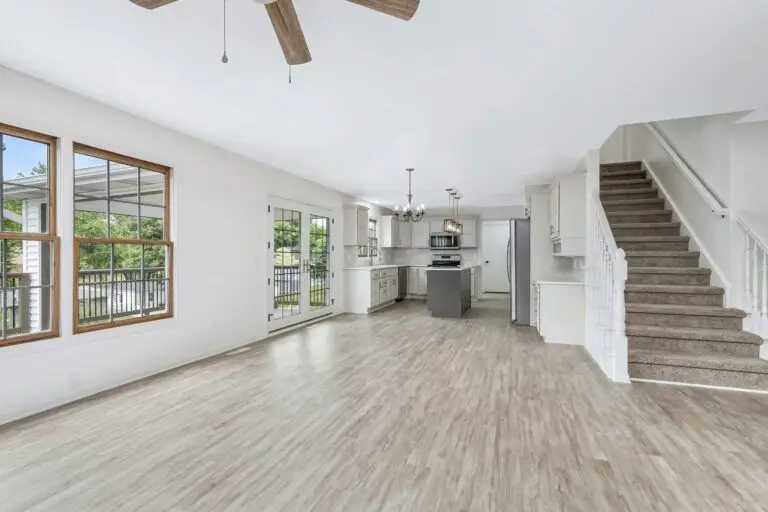
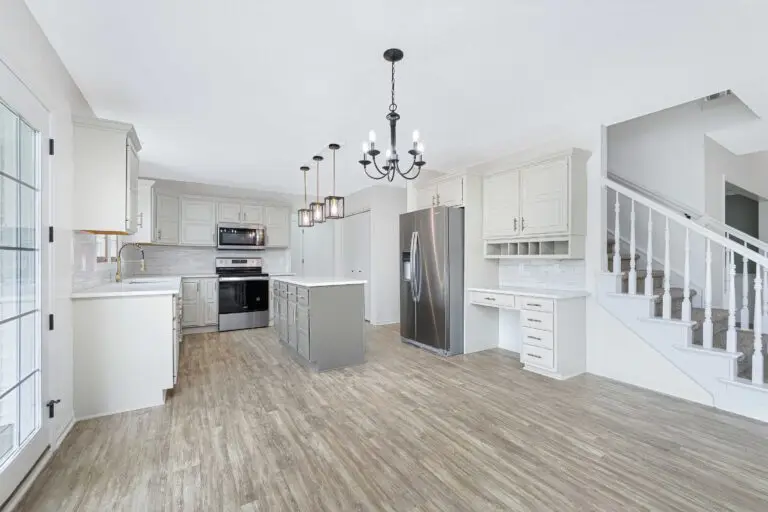
How a cash offer is calculated
Any honest cash buyer works backward from the same place: what the house is worth once it is finished.
We start with what your house would sell for after it has been updated to what buyers in your specific neighborhood currently expect. Not a citywide average, because a 1962 ranch and a 2015 build share nothing but a ZIP code. From there we account for what the updates will actually cost, what it costs to carry and resell the property, and the margin that makes the project worth taking on.
What is left is what we can pay you today. It will come in below the price of a fully renovated comparable house, and that is the trade. You give up some gross price. In return you pay no commission, make no repairs, host no showings, face no inspection renegotiation and carry no financing risk.
When that trade is a bad deal for you: if your house is already updated, shows well, and you have three or four months, the open market will usually net you more. I will tell you when I think that is your situation, and I would rather lose the deal than talk you into the wrong one.
When it is a good deal for you: when the house needs real work, when your timeline is short, when there is no equity to pay a commission out of, when the house is occupied or full of belongings, or when you simply do not want strangers walking through on a Sunday.
Why covering your closing costs is not the same as netting the offer
This is the single most common misunderstanding in a cash sale, and it causes more bad feeling at closing than anything else. So, plainly:
We cover the customary closing costs. That is real and it saves you money. It does not mean the offer figure is what lands in your account.
Coming out of your proceeds, regardless of who is buying:
- Your mortgage payoff, including any interest accrued to the closing date and any prepayment terms.
- Any liens or judgments against the property or against you. Contractor liens, tax liens, support judgments, a second mortgage or a HELOC you may have forgotten is still open.
- The property tax proration. Iowa taxes are paid in arrears, which means you credit the buyer for taxes that have accrued but have not yet been billed. On a metro house this is frequently a four figure number.
- Any unpaid utilities or assessments that attach to the property, including special assessments for street or sewer work.
Ask for a net sheet before you sign anything. Ask me, and ask any other buyer. A net sheet shows the offer price minus every one of those items, so you know the figure you actually walk away with. Anyone unwilling to produce one has told you something.
Iowa property taxes, and the rollback that trips everyone up
Two parts of the Iowa system confuse sellers consistently, and both affect your closing.
Assessed value is not taxable value. Iowa applies a statewide residential rollback, reducing assessed value before any levy is applied. For fiscal year 2027 that figure is 44.5345%, so a house assessed at $300,000 is taxed on roughly $133,600 of value. Any levy rate you read is applied per $1,000 of taxable value. Assessed value is a different and larger number. If somebody quotes you a tax bill off your assessed figure, they have roughly doubled it.
Taxes are paid in arrears. You are always settling up for a period already behind you, which is why the proration at closing exists and why it comes out of your side.
Who does what also catches people out. Your county assessor sets the taxable value. Your county treasurer bills and collects. They are different offices and sellers call the wrong one constantly.
And in this metro you have to know which county you are in before any of that applies. Several cities straddle county lines. Urbandale sits in both Polk and Dallas. So does Grimes. Waukee is in Dallas. Indianola is in Warren County and nearly all of Norwalk is too, with a small slice of Norwalk on its north edge reaching into Polk. Ankeny, Johnston and Altoona are entirely in Polk. Different counties mean different assessors, different treasurers and different consolidated levy rates, so two otherwise identical houses on opposite sides of a line do not carry the same tax burden.
Seller disclosure in Iowa, and the exemptions nobody mentions
Iowa Code chapter 558A requires a written disclosure of known property condition, and it applies to a cash sale exactly as it applies to a listed one. Being straight about a wet basement or a failing roof costs you nothing with a cash buyer, because we are not coming back for a credit over something you told us up front.
There are real exemptions, and two of them matter to a lot of the people who call us:
- Transfers by a fiduciary administering a decedent’s estate, a guardianship, a conservatorship or a trust. If you are selling an inherited house as executor, you may not be required to complete a condition statement at all.
- Transfers connected to foreclosure.
Court-ordered transfers under Iowa Code chapter 633 are also outside it. Confirm your own position with the estate’s attorney or your own rather than relying on a web page, including this one.
Two more things that follow you rather than the house: the homestead credit is tied to you occupying the property and does not transfer to a buyer, and the military and veterans exemption is tied to qualifying ownership rather than to the building.
Structures beyond a straight cash purchase
Most cash buyer pages assume one shape of deal: they pay, you leave, done. That suits most sellers. For some it is the wrong answer, and it is worth knowing the alternatives exist.
Taking over the existing payments. Known in the trade as a subject-to purchase, meaning the property is bought subject to the existing financing instead of paying the loan off with new money. It is the most useful tool available for a seller with little or no equity, because a traditional sale needs commission and costs paid out of proceeds that do not exist. We have done exactly this in Johnston for a seller who had lost her job: we took over her mortgage payments and gave her cash on top, and she stopped having to find that payment every month.
The risk you keep, which you must understand before considering it. The loan stays in your name. You remain the borrower, the balance still shows on your credit and still counts against you if you go to buy something else, and if the payments stopped the default and the foreclosure would land on you. Most mortgages also carry a due-on-sale clause, so the lender is entitled to call the whole balance due when the property transfers. Lenders do not always act on it, and they are allowed to. A listing cannot produce this outcome, because a retail buyer arrives with a new loan that pays the old one off. If you are considering subject-to, have your own attorney read the paperwork first, and we will put the structure in writing.
Payments spread over time. Sometimes a lump sum is the problem instead of the solution. A retirement year, a rental with heavy depreciation recapture, or a straightforward preference for monthly income over a pile of cash. A private buyer can structure some of the price over an agreed period. A bank cannot.
Selling on contract. We have been on the other side of this too, carrying the financing ourselves when we sold a remodeled Grimes ranch to a family who could manage a payment but not a lender’s underwriting.
Two honest caveats. Any structure that spreads payments over time means relying on the other party’s performance, so it must be properly documented and secured, and your own attorney should review it instead of taking our word for anything. And if the appeal of a structure is its tax treatment, that is a conversation for your accountant before you sign. Afterwards is too late. I am not a tax adviser.
How to vet any cash buyer, including us
Search for the best companies that buy houses for cash and you will find no shortage of them. A meaningful number of them never buy a house. They are lead brokers collecting your address to sell to a list of investors, which is why you get eleven phone calls after filling in one form. Ask these questions of anyone who contacts you, and ask us the same.
- Are you buying this yourself, or assigning the contract to someone else? Both are legal. Only one of them means the person in front of you controls whether your closing happens. Get the answer in writing. For the record: I buy with my own funds and close in my own name.
- Whose money is it? A buyer using their own funds can commit to a date and hold it. A buyer who must first find an end buyer is offering you a maybe with a date attached.
- Will the number change after you have seen the house? This is where cash offers most often go wrong. A figure that gets renegotiated down a week before closing was never really an offer. Our practice is to decide quickly: if a house turns out to be more project than we want, we say so and release you, usually within a day or two, instead of tying the property up for a month and then asking for a discount.
- Can you tell me which county and school district my address is in? A buyer who genuinely works this metro can answer from the address. Anyone who cannot has not worked here.
- Can you show me a net sheet? See above. The answer should be yes, immediately.
- Is there a fee at any point? With us, no, at any stage. If anybody asks you for money up front in order to sell your house, end the conversation.
Read reviews, including the unfavorable ones. We answer every review on our Google Business Profile publicly, the critical ones included, and you are welcome to judge the replies as well as the reviews.
What we buy, and in what condition
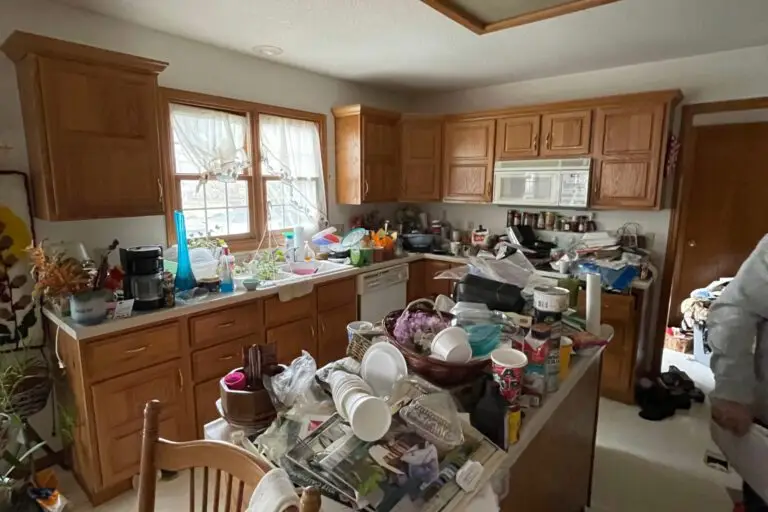
In any condition is close to literally true. Houses with failing roofs, wet basements, fire or smoke damage, mold, hoarding conditions, aluminum wiring, galvanized plumbing, cracked sewer laterals, asbestos floor tile, foundations that have moved. Occupied houses with tenants in place, including tenants who have stopped paying. Houses full of sixty years of belongings. Vacant houses. Houses mid-renovation where the money ran out.
On a clear out: leave the furniture, the basement and the garage, and we handle it. The only things we need you to resolve are vehicles still titled in someone’s name, anything a tenant owns, and hazardous material such as old paint drums or fuel tanks, which carry their own disposal rules.
We also buy land and lots, which most cash buyer operations do not. We bought a parcel in Norwalk and built a house on it.
Where to go from here
If you want a number on a specific house, the city pages have the local detail that actually moves a price, meaning the housing stock, the neighborhoods, the school boundaries, the county, and the situations that come up most often in each town.
Or skip all of it and call 515-303-3405. Ten minutes on the phone will tell you more than any page will, and there is no fee and no obligation at any stage.
Get a cash offer
No fee, no obligation, and I respond within 24 hours.
All photographs on this page are Heberer Homes’ own.